
When people begin planning a cleanroom, the first question that usually comes to mind is: “Where do I even start?”
This is exactly why a well-structured cleanroom checklist is so valuable—it breaks a large, complex project into a clear and understandable roadmap. At Wonclean, after supporting many clients with cleanroom design and engineering, our conclusion is simple: the clearer the checklist, the smoother the project.
Why is a Cleanroom Checklist so Important?
Unlike ordinary rooms, cleanrooms come with a lot of rules—particle control, airflow organization, pressure gradients, filtration efficiency… all tightly interconnected like gears in a precision machine.
A good checklist helps you grasp the entire framework before diving into detailed design.
But the question is: What exactly should a checklist include? What makes it “complete”?
Let’s break it down from the most fundamental elements.
Defining Requirements (More Important Than Design Itself)
Every successful cleanroom project begins with clear requirements. These include the cleanroom’s purpose, product characteristics, and applicable regulatory standards. Whether you’re following cleanroom standards like ISO 14644 or compliance frameworks such as GMP/FDA, the foundation must be set first.
Key requirements include:
-
Cleanliness class (ISO 5–8 or GMP A–D)
-
Temperature & humidity range
-
Pressure gradients
-
Airflow patterns
-
Personnel/material flow routes
-
Environmental monitoring needs
-
Cleaning & maintenance procedures
This serves as the project’s steering wheel—without it, every decision becomes guesswork.
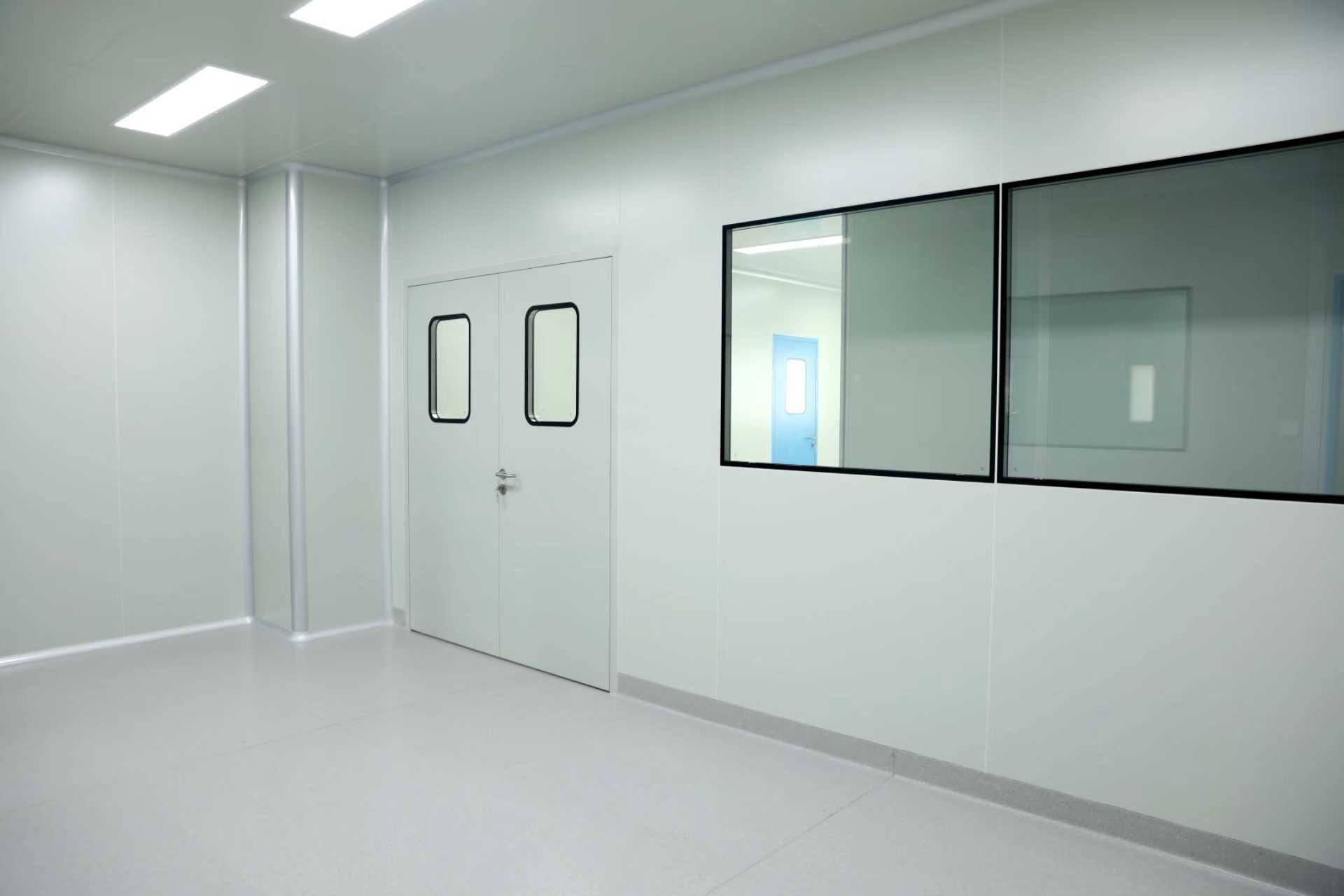
Layout & Process Flow Planning
A good layout leads to a good cleanroom; a poor layout can never be fixed later.
Your checklist should verify:
-
Separation of personnel and material entry
-
Adequate size of gowning rooms & airlocks
-
Process flow designed to prevent cross-contamination
-
Proper location for utility rooms
-
Compliance of emergency exits
If people and materials move inefficiently, even the most powerful filtration system cannot save the cleanroom’s performance.
Building Materials & Surface Systems
Cleanrooms must be easy to clean, corrosion-resistant, and free of dirt-trapping points.
Checklist essentials:
-
Wall materials (FRP panels, aluminum, stainless steel, etc.)
-
Flooring (welded vinyl, epoxy, ESD flooring)
-
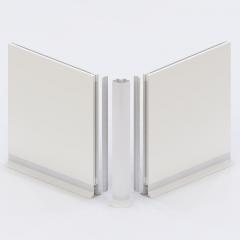
Cove-radius corners instead of sharp angles
-
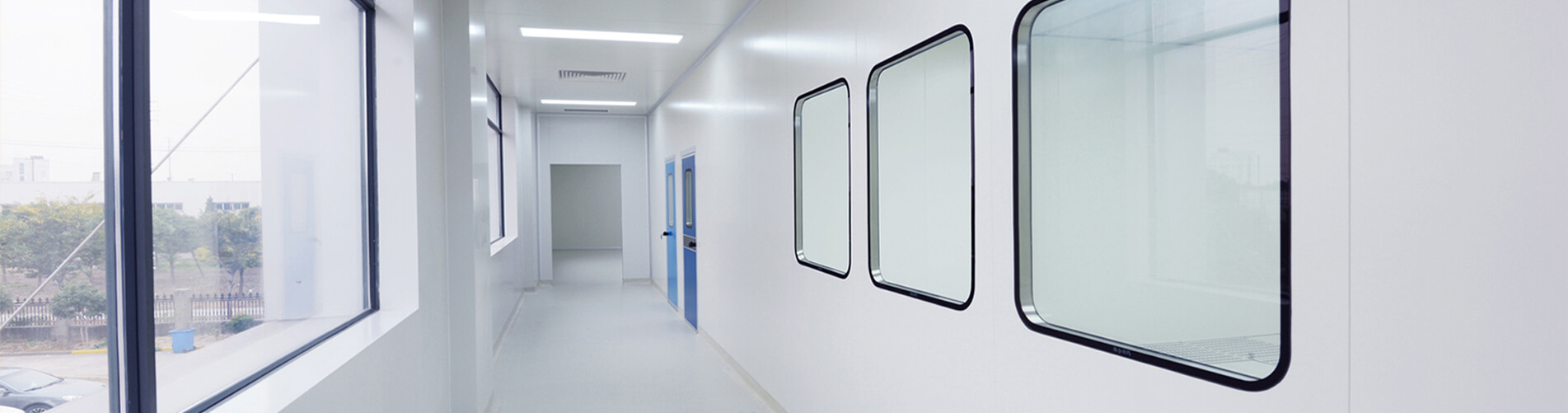
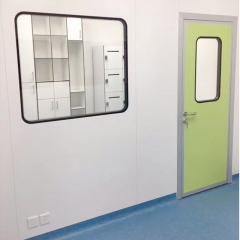
Flush windows designed to prevent dust accumulation
-
Proper sealing of doors and pass-throughs
Materials may look simple—but they determine long-term durability and cleanliness.
HVAC: The Heart and Soul of a Cleanroom
This is where most people focus—the air system.
But a cleanroom HVAC isn’t “just an air conditioner.” It is the engine of air quality.
Checklist should include:
-
Air changes per hour (ACH)
-
HEPA/ULPA coverage and placement
-
Airflow patterns (unidirectional, non-unidirectional, mixed flow)
-
Temperature and humidity stability
-
Pressure differentials (typically 10–15 Pa)
-
Fresh air ratios and exhaust strategy
-
Fan heat and cooling load calculations
For pharmaceutical facilities, such as pharmacy clean room design, pressure gradients and contamination control become regulatory priorities.
Related:HVAC Clean Room: What Exactly Is the System Calculating? A Complete Guide to Core Principles and Key Calculations
Utilities & Support Systems
No cleanroom operates without a complete support infrastructure. Checklist should review:
-
Hand-washing stations & drying systems
-
Purified/process water pipelines
-
Compressed air & gas systems
-
Power distribution & backup supply
-
Monitoring for temperature, humidity, pressure & particles
-
CCTV, networking & data-logging systems
Each must avoid introducing vibration, contamination, or airflow disturbance.
Cleaning, Maintenance & Personnel Protocols
A cleanroom stays clean not because of equipment, but because of behavior.
Checklist includes:
-
Cleaning frequency & chemical compatibility
-
Lint-free cleaning tools
-
Standardized gowning procedures
-
Waste handling routes
-
Whether equipment placement disrupts airflow
Human behavior always remains the top contamination source.
Validation, Monitoring & Continuous Compliance
Before going operational, the cleanroom must pass a full validation process:
-
DQ / IQ / OQ / PQ
-
Filter integrity testing
-
Airflow visualization (smoke testing)
-
ACH verification
-
Environmental monitoring point configuration
A strong checklist ensures every task is ready before validation begins.
Related:Understanding Cleanroom Monitoring System: Importance and Core Applications
Conclusion
A truly effective cleanroom checklist is more than a list—it’s a tool that helps you understand how a cleanroom actually works. It guides owners to clarify objectives, gives designers a reliable reference, simplifies maintenance, and strengthens regulatory confidence. Whether you’re building a new cleanroom or optimizing an existing one, a structured and logical checklist makes the entire process more efficient and controlled.
At Wonclean, we believe cleanroom engineering doesn’t need to be complicated. With the right approach, it becomes an exciting and manageable project. If you’re planning or evaluating a cleanroom system, feel free to reach out—we’re always happy to share real-world expertise.
FAQs:
Q: What is the checklist of inspection?
An inspection checklist outlines all points that must be reviewed during a facility assessment, including structural conditions, HVAC performance, equipment status, and regulatory compliance. It ensures nothing is overlooked and provides a standardized method for documenting inspection outcomes.
Q: How to validate a cleanroom?
Cleanroom validation follows a structured process including DQ, IQ, OQ, and PQ. Key steps involve HEPA filter integrity testing, airflow visualization, air change rate verification, particle count testing, and environmental monitoring setup. Validation confirms that the cleanroom performs according to its design and regulatory standards.
Q: Which of these are necessary steps of the inspection checklist process?
Essential steps include defining inspection criteria, performing on-site assessments, documenting findings, verifying compliance with standards (such as ISO 14644 or GMP), and implementing corrective actions. These steps ensure a complete and reliable inspection process from start to finish.
Q: Can the URS be modified during the middle of a project?
Yes, the URS can be updated during a project, but only through a formal change-control process. Any modification should evaluate the impact on compliance, cost, and project schedule. Proper documentation ensures the design remains aligned with regulatory expectations.
Q: How do you select flooring materials for a cleanroom?
Choose flooring based on durability, chemical resistance, cleanability, and electrostatic requirements. Welded vinyl, epoxy, and ESD flooring are the most common options. The best choice depends on the cleanroom classification and the types of cleaning agents used.
Q: How do you decide between a positive-pressure and negative-pressure cleanroom?
Use positive pressure when you need to protect the product from outside contaminants. Choose negative pressure when the goal is to contain hazardous materials and protect personnel and the environment. The correct pressure strategy depends on your process risk profile.
Q: Are windows required in a cleanroom?
Windows are not mandatory, but they are useful for supervision, visibility, and safety. If installed, they must be flush-mounted, sealed, and non-particle generating to maintain proper cleanliness and airflow performance.
Q: How do you calculate air changes per hour (ACH) in a cleanroom?
ACH is calculated using the formula: ACH = (Airflow in CFM × 60) ÷ Room Volume. This value ensures the cleanroom meets ISO or GMP airflow requirements. Regular verification is essential to maintain cleanroom performance.






 Servizio online

