


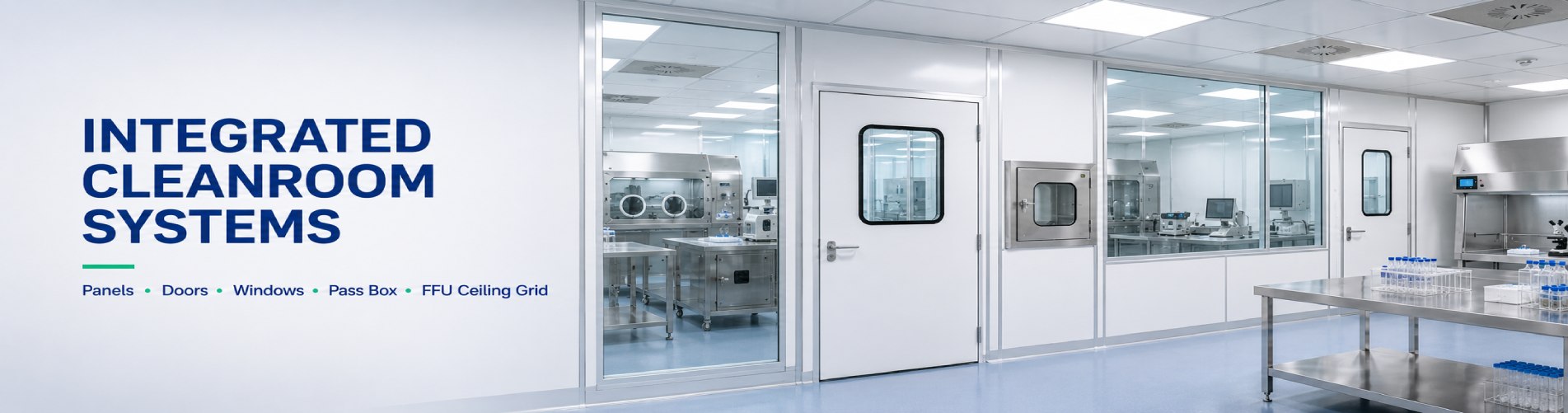

For decades, building a cleanroom meant building it in place: months of on-site construction, wet trades, and a sequential schedule that had to finish before any equipment could move in. For the two industries that depend most heavily on contamination control — pharmaceuticals and semiconductors — that model is increasingly out of step with how fast they now need to add, change and move capacity. A different approach is taking hold: prefabricated modular cleanrooms and fully containerized cleanrooms, manufactured and quality-checked in a factory, then assembled or simply delivered on site.
This briefing looks at why that shift is happening, what it means for pharmaceutical and semiconductor manufacturers specifically, and how Wonclean Technology Company Limited's modular systems — including its containerized Meiji series — are being used in real projects across both sectors.
01 — The shift
Why the fixed cleanroom became a bottleneck
A conventional cleanroom is constructed on site, system by system, in sequence — structural work, partitions, ceilings, HVAC, ductwork, electrical and finishing, often over many months. Every stage of cutting and finishing happens inside the space that is meant to end up free of particles, and once the room is finished, changing it — expanding a suite, adding a line, relocating — usually means tearing into a validated environment.

For pharma and semiconductor producers, three pressures have made that model painful. Time-to-market is decisive: a delayed biologics suite or fab support cleanroom delays revenue and, in healthcare, patient access. Capacity has to flex: product portfolios shift, demand spikes, and processes are upgraded far more often than a fixed building can comfortably accommodate. And quality has to be provable from day one, under ISO 14644 and, in pharma, GMP.
Prefabrication answers all three. Modular and containerized cleanrooms move the bulk of the work into a controlled factory, so fabrication runs in parallel with site preparation, quality is consistent and documented, and the finished modules arrive ready to assemble — or, in the containerized case, ready to plug in. The result is a controlled environment delivered in weeks rather than months, designed from the outset to be expanded, reconfigured or relocated.
Where the time goes: conventional vs modular vs containerized
Illustrative — factory work runs in parallel with site preparation
Illustrative schematic; actual timelines depend on size, cleanliness class and HVAC complexity.
02 — Pharmaceuticals
Pharma: speed and flexibility, without compromising compliance
Nowhere is the case for prefabrication stronger than in pharmaceutical manufacturing. Biologics, vaccines, sterile injectables and cell-and-gene therapies all demand high-grade controlled environments — and they live in a world of compressed timelines, shifting demand and frequent process change. The COVID era made the lesson concrete: the ability to stand up validated, GMP-grade capacity quickly is a strategic capability, not a convenience.
Pharmaceutical cleanrooms are graded under the EU/PIC-S GMP scheme as Grade A through D, which broadly map onto ISO 14644-1 classes — Grade A (the critical zone for aseptic filling) corresponds to the most stringent ISO 5 conditions, while support areas sit at Grade C/D. Meeting these grades reliably depends on more than filtration. It requires seamless, flush, non-shedding surfaces that withstand repeated aggressive disinfection; a controlled pressure cascade between rooms; airlocks, pass boxes and air showers that protect the clean core; and continuous monitoring of temperature, humidity and differential pressure.


Modular and containerized construction supports every one of these requirements while adding speed and flexibility:
- Speed to market. Suites that would take many months to build conventionally can be manufactured and assembled in weeks, bringing fill-finish, formulation or QC-lab capacity online far sooner.
- Multi-product flexibility. Bolted, gasketed modular joints let a facility reconfigure suites as a product portfolio evolves, rather than committing concrete to a single process for a decade.
- Deployable capacity. Containerized GMP-style modules can place fill-finish or testing capability close to demand — regional sites, satellite facilities, or rapid pandemic-style scale-up — and be relocated when priorities change.
- Documented, consistent quality. Building the envelope in a factory makes quality repeatable and the paper trail cleaner, which streamlines qualification and validation.
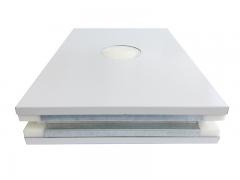
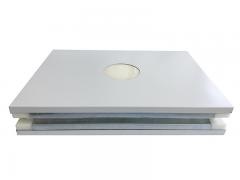
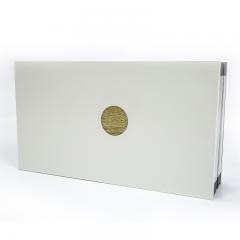
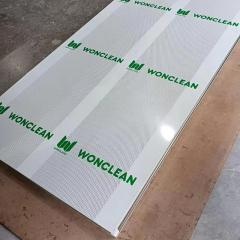
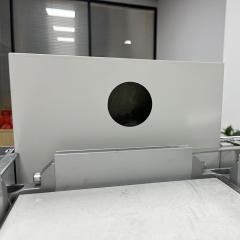
Wonclean's product set is built for exactly this duty. Its HPL sandwich panels — high-pressure laminate over a fire-resistant core — give a hard, chemically resistant, easy-clean surface suited to frequent disinfection, while metal sandwich panels with rock-wool or honeycomb cores deliver flame retardance and a flush, non-shedding finish. Sealed flush doors and double-glazed vision windows, interlocked pass boxes and air showers complete a contamination-controlled envelope. Behind the walls, an in-house digital control system regulates and remotely monitors temperature, humidity, air velocity and pressure differential — the parameters a pharmaceutical quality system needs to demonstrate control over.
For larger sterile facilities that need tight environmental control, the Meixin series is available as a centralized ducted system built around a central air-handling unit and roof ductwork; for deployable or satellite capacity, the containerized Meiji series brings a fully self-contained, HVAC-integrated cleanroom that arrives ready to operate.
In pharma, the question has shifted from "how clean can we build it" to "how fast can we bring validated, flexible, clean capacity online" — and that is precisely where prefabrication wins.
03 — Semiconductors
Semiconductors: the strictest contamination control, without the wait
Semiconductor manufacturing sets the highest bar for particle and electrostatic control. At advanced nodes, a single sub-micron particle can ruin a die, so production happens under ISO Class 5 (and cleaner) conditions, with vertical unidirectional airflow, fan-filter-unit ceilings and anti-static raised perforated flooring that lets air sweep contaminants straight down and out of the work zone.
While the largest wafer fabs are vast, fixed turnkey builds, a great deal of semiconductor-adjacent cleanroom demand is an excellent fit for modular methods: metrology and inspection rooms, R&D and pilot lines, advanced-packaging and test areas, sub-fab support spaces, and fast capacity additions alongside live production where construction disruption must be minimized. Modular cleanrooms deliver these quickly and to specification, and mobile modular labs can place capability exactly where a project needs it.

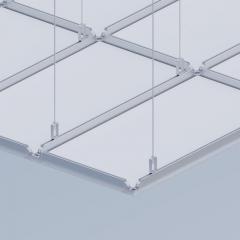
Wonclean's semiconductor work shows the approach in practice. At Kunshan Mengxian Electronic Technology, a Meixin-series cleanroom combines top-supply / bottom-return unidirectional airflow, anti-static raised perforated flooring and fully flush enclosures for precision-electronics manufacturing. Its FFU ceiling grid, built in 6063-T5 aluminium alloy, integrates the fan-filter units and ceiling into one engineered system, and the company's flagship ISO Class 5 laboratory for Apple in Shanghai demonstrates capability at the demanding end of the scale. The same prefabricated logic that serves pharma — factory quality, fast assembly, designed-in flexibility — applies directly to the electronics cleanroom.
04 — The Wonclean approach
Three modular systems, one accountable manufacturer
Wonclean designs and manufactures the cleanroom envelope itself — panels, FFU ceiling grid, doors, windows, air showers and pass boxes — and delivers it as three complementary families, so the right level of prefabrication can be matched to each project.
| Approach | What it is | On-site time | Flexibility & relocation | Best fit |
|---|---|---|---|---|
| Conventional | Built on site, system by system | Months | Difficult; changes disturb a validated space | Very large fixed fabs |
|
Meixin Modular |
Prefabricated panels, ceilings, doors and floors; Meixin offers an FFU or a centralized ducted HVAC variant, Ark a reconfigurable steel-frame build | Weeks | High; designed for expansion and reconfiguration | Pharma suites, labs, electronics rooms, capacity additions |
| Meiji Containerized | Self-contained cleanroom in robust containers with integrated HVAC, electrical and plumbing — plug-and-play | Days–weeks | Highest; stackable, combinable, shippable, relocatable | Deployable / satellite capacity, mobile labs, field & rapid scale-up |
The containerized Meiji series is the clearest expression of where the industry is heading. Each unit arrives as a complete, insulated, HVAC-equipped cleanroom that can be combined and stacked into larger layouts, deployed outdoors, and relocated when needs change. For the University of Science and Technology of China's Shanghai Research Institute, Wonclean delivered exactly this: an outdoor, plug-and-play mobile modular cleanroom with an independent structure, external HVAC and laboratory equipment pre-installed before delivery.

Across all three families the proposition is the same: a single manufacturer accountable for the whole envelope, built in-house to a strict quality process, certified and documented — with quality-management registration, third-party fire-test reports (e.g. report no. FH2024NG0228) and granted patents for modular laboratory structures. Ownership is de-risked by a two-year warranty, two free annual inspections, 7×24 support with a 24-hour response target, and lifetime relocation at cost. The model also travels: Wonclean has delivered a laboratory project in the United States and runs a manufacturing and installation hub in Penang, Malaysia.
Bringing pharma or semiconductor capacity online?
Tell us your target cleanliness class or GMP grade, floor area and timeline, and Wonclean's engineers will recommend a modular or containerized solution — and quote a prefabricated system that installs fast and is built to flex.
FAQ
Frequently asked questions
Can modular and containerized cleanrooms meet GMP and ISO standards?
How fast can a containerized cleanroom be deployed?
Are these cleanrooms suitable for both pharma and semiconductor use?
Can a modular cleanroom be expanded or relocated later?
Cleanliness-class and GMP references are simplified for orientation; the correct target for any process must be confirmed by a qualified engineer. The market figure is approximate and converted to USD from industry research summarised in the Chinese financial press. Project and product details describe Wonclean Technology Company Limited's own work and offerings.


 Servizio online

