GMP Modular Cleanroom Design for Pharma: ISO 7/8, Pressure Differential and Validation Readiness
Jul 28, 2026
Technical Design Guide | Pharma GMP Cleanroom
GMP Modular Cleanroom Design for Pharma: ISO 7/8, Pressure Differential and Validation Readiness
A GMP modular cleanroom for pharmaceutical production must do more than achieve a target ISO 7 or ISO 8 particle class. It must support contamination control strategy, pressure differential, personnel and material flow, cleanable surfaces, monitoring access and documented validation from design through qualification.
ISO 7/8Classify particles under defined operating states.
PressureProtect clean zones with a documented cascade.
CCSSupport contamination control strategy.
ValidationPrepare DQ, IQ and OQ evidence early.
In pharmaceutical facilities, modular cleanroom design must balance speed with evidence. A factory-built or modularized envelope is valuable only when its surfaces, joints, airlocks, doors, HVAC interfaces and monitoring points can be documented and verified against GMP expectations.
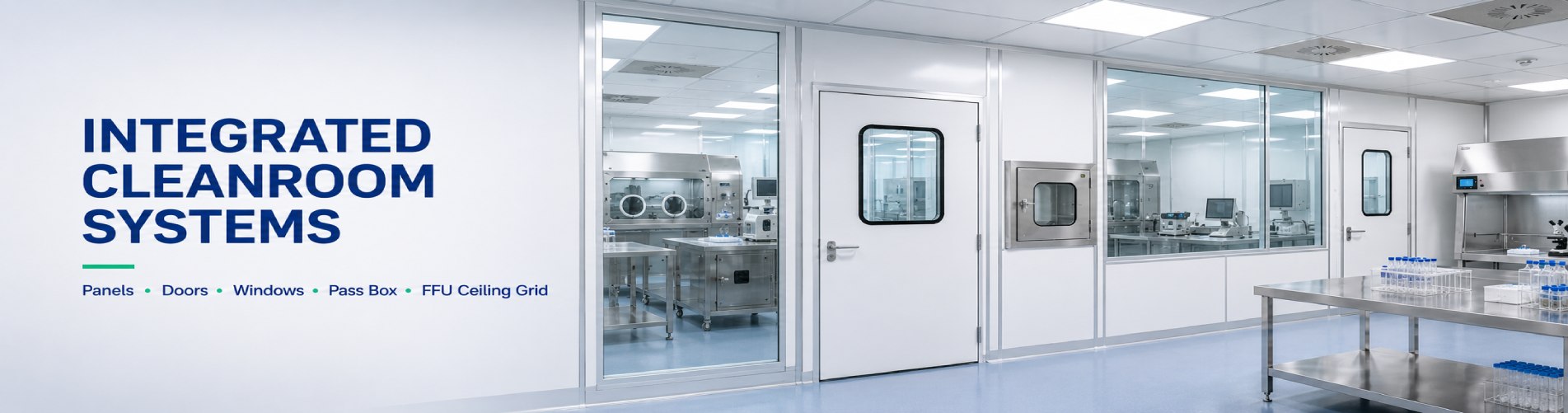
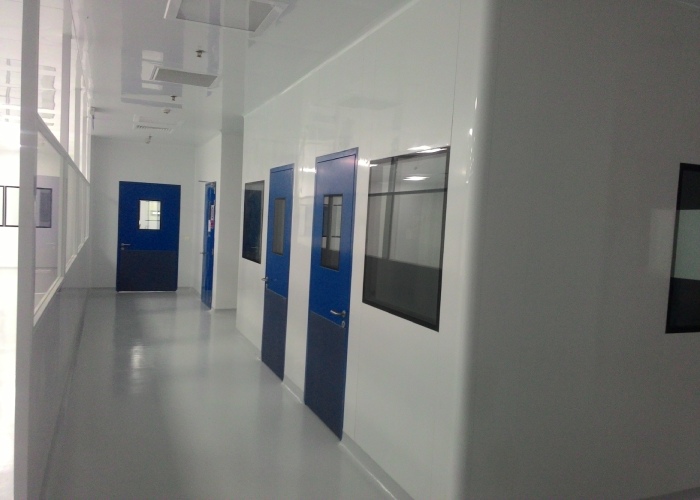
GMP corridor and room interfaces. Doors, windows and ceiling returns should support pressure differential and cleanable room boundaries.
GMP Design Logic
Start with Contamination Control, Not Only Room Class
A pharmaceutical cleanroom should be designed from process risk: open product exposure, microbial risk, personnel intervention, material transfer, cleaning frequency, equipment maintenance and environmental monitoring. ISO 7 or ISO 8 targets are important, but they are only one part of the contamination-control picture.
EU GMP Annex 1 emphasizes a contamination control strategy for sterile product manufacturing. Even when a room is not Grade A/B, the modular cleanroom envelope should help control contamination routes through cleanable construction, pressure control and defined flows.
Wonclean modular cleanroom projects should therefore be reviewed with user requirement specifications, process flow diagrams, HVAC zoning, panel elevations, door interlocks and qualification documents before production starts.
ISO 7/8 and Pressure
ISO 7/8 Rooms Still Need a Real Pressure Differential Strategy
ISO 14644-1 classifies cleanrooms by airborne particle concentration. In GMP facilities, the same room also needs a defensible pressure differential strategy that reflects product protection, cross-contamination risk, personnel movement and material transfer.
A modular envelope can make pressure control easier because wall panels, doors, windows and penetrations are repeatable. But the design must avoid uncontrolled leakage. Door gaps, pass-through seals, ceiling returns and utility penetrations can all weaken a pressure cascade.
Validation-ready design checks for GMP modular cleanrooms.
Design item
GMP risk
Evidence to prepare
Pressure cascade
Cross-contamination or loss of product protection.
Room pressure map, alarm logic and balancing report.
Airlock sequence
Personnel or material flow can bypass control points.
Door interlock logic and operating SOP.
Cleanable surfaces
Residue, microbial harborages or cleaning failure.
Material records, sealant data and cleaning compatibility review.
Monitoring access
Incomplete environmental or pressure records.
Sensor location plan, calibration list and maintenance access route.
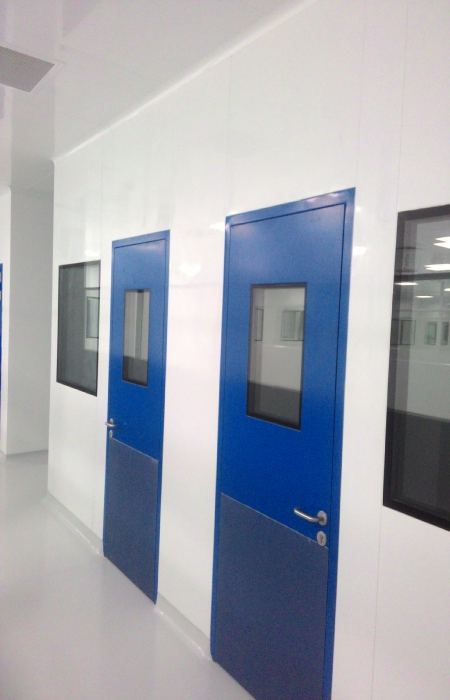
Door and airlock interfaces. Pressure differential depends on seals, interlocks, door behavior and user procedures.
Cleanable Envelope
Wall, Ceiling and Door Details Must Support Cleaning and Inspection
A modular pharmaceutical cleanroom should reduce ledges, exposed fasteners, rough trims and uncontrolled gaps. Wall panels, ceiling panels, view windows and door frames should be selected for wipe-down, visibility, impact risk and compatibility with cleaning agents.
Where rooms are ISO 7 or ISO 8 support areas, cleanability still matters. These areas may feed higher-grade processes, hold components, support gowning or contain equipment staging. If the support area sheds particles or holds residue, upstream contamination control becomes harder.
The FDA aseptic processing guidance notes that cleanroom design and control are part of CGMP expectations for sterile drug manufacturing. The exact acceptance criteria should come from the facility's process risk assessment, regulatory market and quality system.
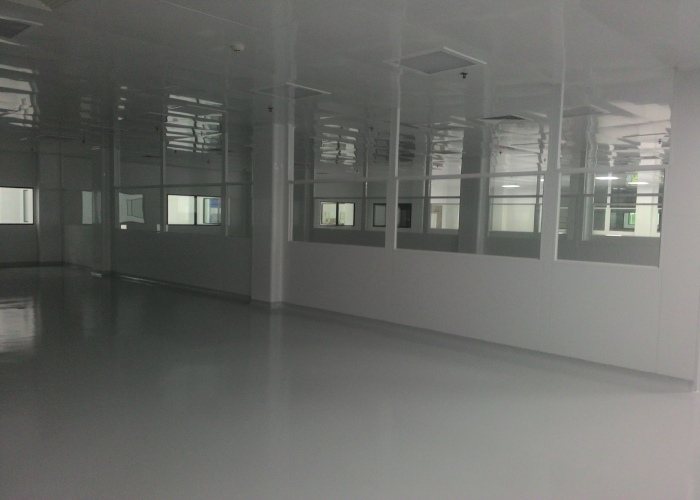
Windowed cleanroom boundary. Glazing, wall panels and ceiling interfaces should be designed for cleaning, observation and qualification.
Validation Readiness
Validation Readiness Starts Before Installation
A GMP modular cleanroom should leave the design stage with qualification evidence in mind. Typical documents include URS traceability, design review, material specifications, layout drawings, HVAC zoning, filter schedule, pressure setpoint map, room data sheets, calibration list and construction inspection plan.
During start-up, ISO 14644-3 test methods can support cleanroom verification such as airflow volume, pressure difference, recovery and installed filter leakage where specified. GMP qualification then adds site procedures, records, deviation handling and acceptance criteria.
A modular design should not hide critical services. Maintenance access for dampers, sensors, filters, interlocks and pressure tubing should be planned without damaging cleanable finishes.
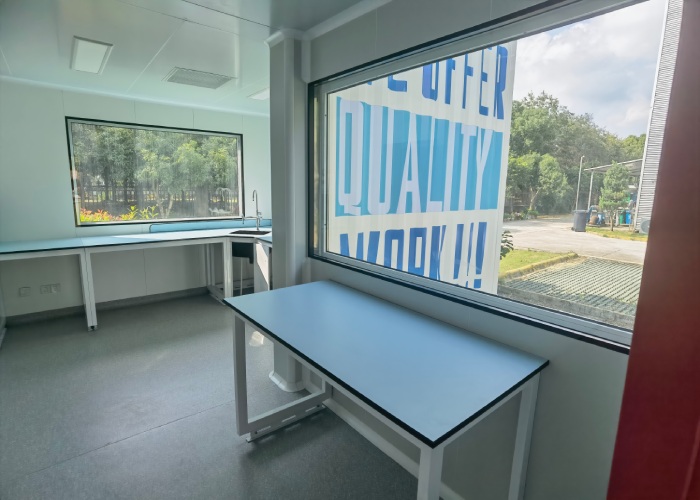
Modular cleanroom interior. Furniture, windows, diffusers and service penetrations should be captured in validation-ready layout records.
Technical Fact Check
Source-Backed Facts Used in This Article
Fact used
Source
Design implication
Cleanroom classification is based on airborne particle concentration.
HVAC, personnel, cleaning and monitoring must be documented for regulated use.
Referenced Standards
Referenced Standards and Public Access Notes
ISO 14644-1: official ISO page for air cleanliness classification by particle concentration.
ISO 14644-3: official ISO page for cleanroom test methods.
ISO 14644-4: official ISO page for cleanroom design, construction and start-up.
EU GMP Annex 1: official European Commission PDF for manufacture of sterile medicinal products.
FDA aseptic processing guidance: official FDA guidance page. Full regulatory interpretation should be confirmed with the facility quality team.
FAQ
GMP Modular Cleanroom FAQ
Is ISO 7 or ISO 8 enough for GMP compliance?
No. ISO class is one performance requirement. GMP compliance also depends on contamination control strategy, procedures, monitoring, personnel flow, cleaning, maintenance and qualification records.
What pressure differential should a GMP cleanroom use?
There is no universal value that fits every process. The pressure cascade should be defined by product protection, contamination risk, hazardous materials, personnel/material routes and local GMP expectations.
Can modular cleanrooms be validated like conventional cleanrooms?
Yes, if design, materials, installation and test records are prepared properly. Modular construction can support validation when documentation and inspection points are planned early.
What should be reviewed before ordering a GMP modular cleanroom?
Review URS, room classification, pressure map, personnel and material flows, HVAC zoning, cleanable surfaces, monitoring points, maintenance access, cleaning agents and qualification acceptance criteria.
Wonclean Engineering Note
Build the Modular Room Around GMP Evidence
A GMP modular cleanroom should be engineered so the installation can be inspected, tested, cleaned and maintained without rewriting the design intent after delivery. This requires early coordination between cleanroom envelope, HVAC, utilities, validation and quality teams.





 Servizio online

