Selecting Semiconductor Cleanroom Ceiling Systems: T-Bar Ceiling, FFU Coverage and ISO Cleanliness Control
In a semiconductor cleanroom, the ceiling is the air delivery platform, service layer and structural interface for FFUs, filters, lighting, access panels and monitoring points. A T-bar ceiling system must therefore be selected around ISO cleanliness targets, FFU coverage, leakage control and maintenance access, not only profile dimensions.
CoverageMatch airflow pattern to ISO class and heat load.
SealControl bypass leakage at filters and ceiling joints.
ServiceEnable safe filter, FFU, cable and lighting maintenance.
The wrong ceiling choice can make a cleanroom expensive to qualify and painful to maintain. FFU density may look sufficient on a plan, but if the ceiling grid deflects, filters are difficult to change, gasket details leak or returns are poorly placed, the room may struggle to meet ISO classification and recovery expectations.
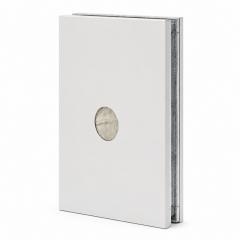
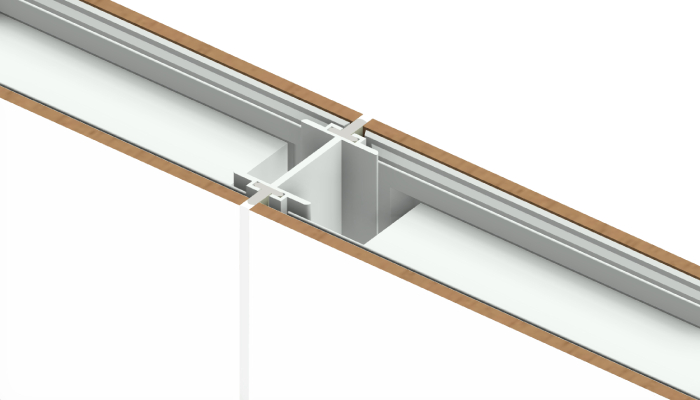
T-bar profile and sealing logic. The ceiling grid must locate, support and seal FFUs, lights, blank panels and access modules with repeatable precision.
Selection Logic
Start with the ISO Target, Then Build the Ceiling Around Airflow
ISO 14644-1 defines airborne particle cleanliness classes, but it does not prescribe a single ceiling construction. The ceiling designer must translate the target class into air supply strategy, filter location, return-air path, recovery expectation and maintenance access.
For semiconductor rooms, ceiling design should also account for tool heat, equipment height, process sensitivity, AMC strategy, static-control needs and above-ceiling service traffic. A ceiling that works for a small metrology lab may be inadequate for a dense process bay with frequent filter service and strict pressure control.
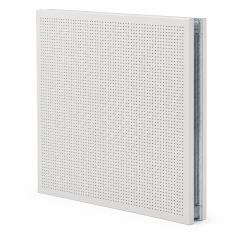
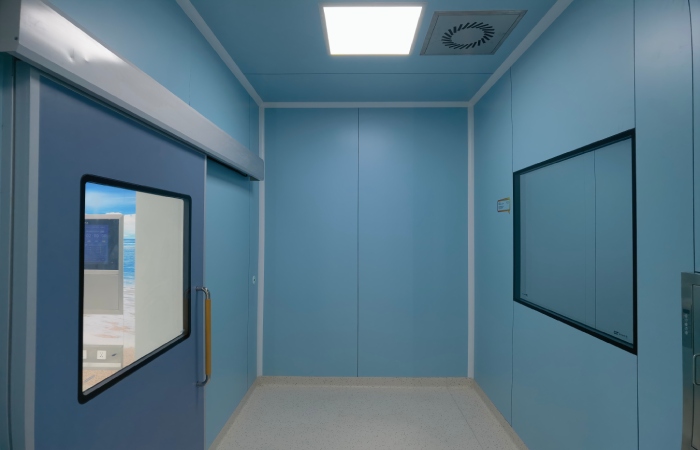
Ceiling as airflow platform. Light positions, diffuser or filter locations and blank panels should support clean airflow instead of fighting it.
FFU Coverage
FFU Coverage Is a Performance Decision, Not a Marketing Percentage
FFU coverage is often discussed as a percentage of ceiling area, but the useful question is whether clean air reaches the risk locations and returns without short-circuiting. A high coverage number can still perform poorly if FFUs are clustered away from tools, blocked by equipment, mixed with poorly sealed blank panels or not balanced with returns.
The project team should define air velocity targets, filter module size, control zones, redundancy, energy strategy and filter replacement sequence. For particle-sensitive semiconductor spaces, HEPA or ULPA filter class and documentation should be aligned with a recognized filter framework such as ISO 29463-1.
FFU ceiling decisions that affect ISO cleanliness control.
Decision
Why it matters
Practical check
FFU density
Controls supply volume, recovery and local cleanliness.
Compare risk areas, heat load and return geometry.
Grid load rating
Prevents deflection and seal stress around filter modules.
Verify FFU, filter, lighting and access loads.
Blank panels and lights
Can disturb airflow or create leakage paths.
Coordinate panel schedule with airflow simulation or risk review.
Service access
Filter changes can become contamination events.
Define room-side or service-side replacement route.
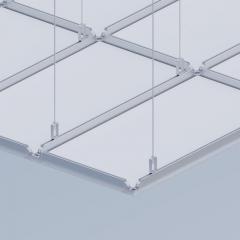
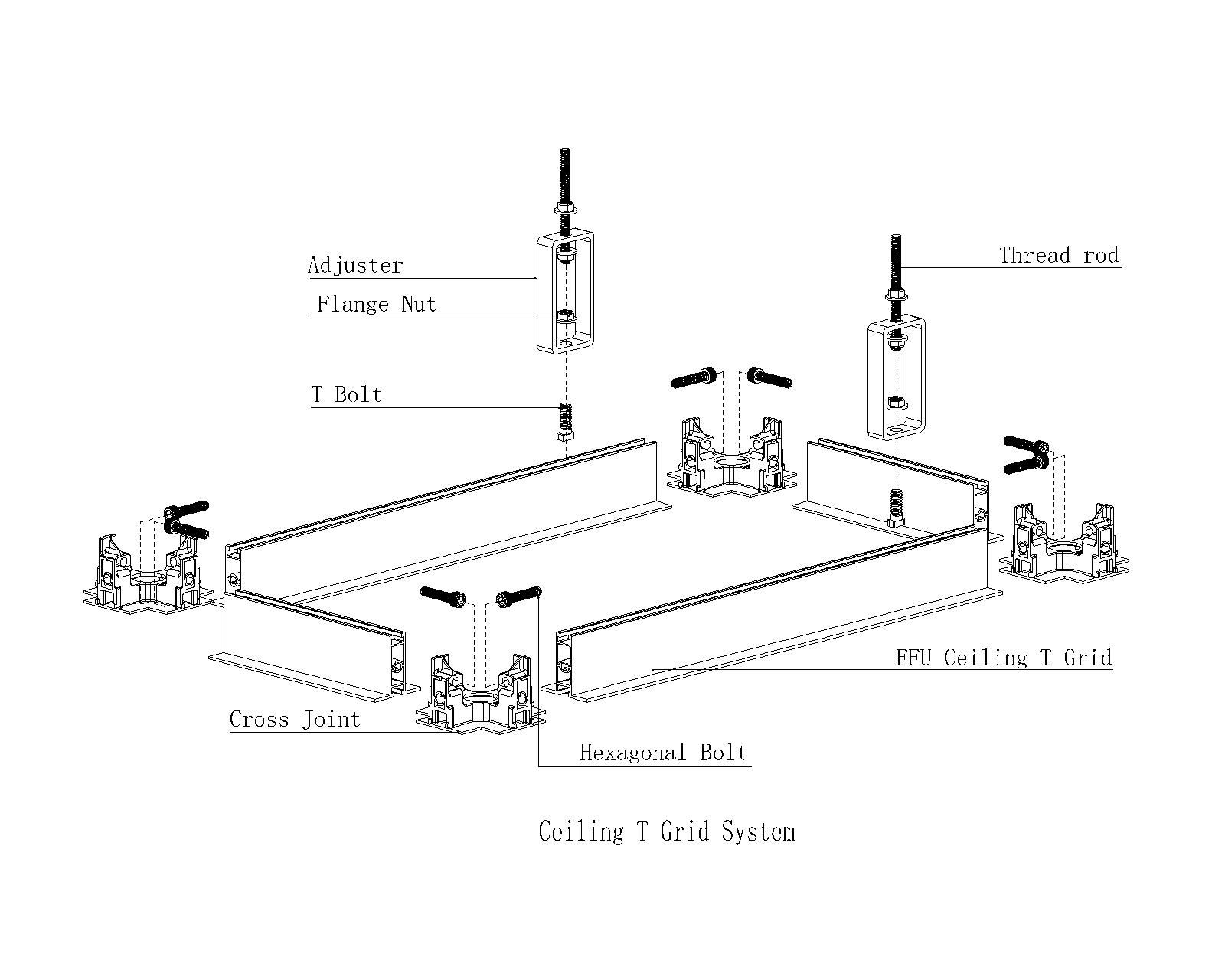
FFU grid system coordination. Grid profiles, cross joints, suspension rods and adjusters should be treated as one ceiling assembly.
T-Bar System
A Semiconductor T-Bar Ceiling Must Control Load, Seal and Alignment
A T-bar ceiling grid for cleanrooms should provide repeatable module dimensions, rigid support, cleanable surfaces and gasket-compatible seats for FFUs and blank panels. Aluminium systems are widely used because they combine lightweight construction with corrosion resistance, but the connection details, suspension spacing and leveling method determine whether the grid remains stable during installation and maintenance.
The ceiling should be reviewed as a complete assembly: grid profiles, cross connectors, suspension rods, M10 regulators or leveling components, wall interfaces, sealants, filter gaskets, lights, blank panels and access panels. If one component is changed late, airflow and leakage performance can change with it.
Confirm module dimensions before ordering FFUs, lights and blank panels.
Verify ceiling deflection under combined FFU, filter and service loads.
Use gasket and sealing details that can be inspected after installation.
Keep service zones and cable routing away from critical seal interfaces.
Qualification
Ceiling Design Should Anticipate Classification and Test Methods
ISO 14644-3 provides cleanroom test methods in support of operation and classification. For a ceiling system, practical verification may include installed filter leakage, airflow volume or velocity, air pressure difference, airflow direction visualization, recovery and particle concentration testing.
The ceiling supplier should therefore support drawings, module schedules, filter records, grid load information, installation inspection forms and maintenance guidance. These documents help the commissioning team verify that the room performs as designed rather than merely looks complete.
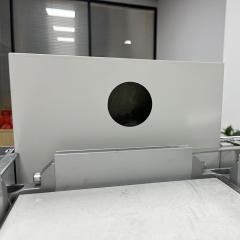
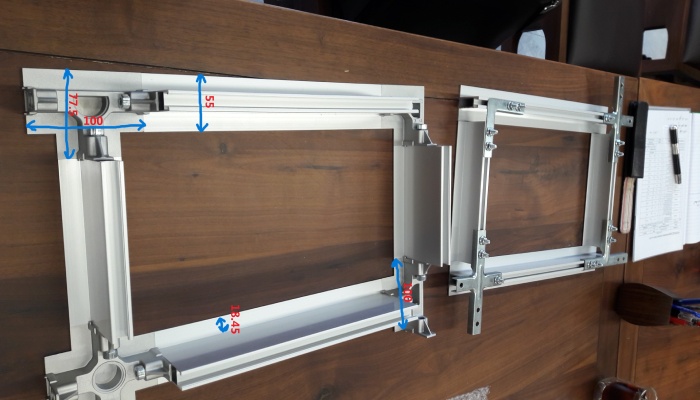
Service and load detail. Suspension, leveling and profile dimensions affect ceiling alignment, gasket compression and maintenance reliability.
Energy and Operation
Stable Cleanliness Should Not Require Uncontrolled Energy Use
More FFUs are not always the best answer. Semiconductor cleanrooms need enough airflow to meet cleanliness and recovery requirements, but excessive airflow increases fan energy, noise, filter loading and thermal management challenges. Grouping FFUs into control zones can support operating flexibility, provided that airflow balance and pressure cascade remain stable.
ISO 14644-16 addresses energy efficiency in cleanrooms and associated controlled environments. In practical ceiling selection, this supports a design process where cleanroom performance and energy use are considered together: correct FFU density, efficient motors, clean filters, balanced returns and clear maintenance intervals.
Technical Fact Check
Source-Backed Facts Used in This Article
Fact used
Source
Design implication
Cleanroom ISO classes are based on airborne particle concentration.
FFU coverage should balance cleanliness, recovery, pressure and fan energy.
Referenced Standards
Referenced Standards and Public Access Notes
ISO 14644-1: official ISO page for cleanroom classification by particle concentration.
ISO 14644-3: official ISO page for cleanroom test methods.
ISO 29463-1: official ISO page for high-efficiency air filter classification and documentation.
ISO 14644-16: official ISO page for energy efficiency in cleanrooms. Full ISO standards are copyrighted and may require purchase or authorized access.
FAQ
Frequently Asked Questions
What is a T-bar ceiling in a semiconductor cleanroom?
A T-bar ceiling is an aluminium grid system that supports FFUs, filters, lights, blank panels and access modules. In cleanrooms it must also control sealing, alignment and serviceability.
How much FFU coverage does a semiconductor cleanroom need?
It depends on ISO class, heat load, process sensitivity, recovery target, return-air path and equipment layout. Coverage percentage should be verified against airflow performance, not used as a stand-alone rule.
Why is ceiling leakage important?
Bypass leakage around filters, blank panels or joints can introduce unfiltered air and make ISO classification harder to maintain. Gasket design and installation inspection are therefore critical.
Should FFUs be serviced from the room side or above the ceiling?
Both approaches can work. The correct method depends on cleanroom class, ceiling structure, shutdown tolerance, service access and contamination-control procedure. The maintenance route should be designed before installation.
Select the Ceiling as a Performance System
Wonclean cleanroom ceiling systems combine T-bar grids, FFU support, cleanroom panels, lighting coordination and service access so semiconductor projects can move from design intent to verified ISO cleanliness with fewer ceiling conflicts.





 Servizio online

